Comprehensive Bookkeeping Tax Services UK: Expert Solutions for Small Businesses and Self-Employed

Bookkeeping tax services combine routine financial record-keeping with targeted tax compliance and advisory work to keep UK small businesses and self-employed people compliant, efficient and tax-aware. This guide explains what those combined services cover, how they prevent HMRC penalties, and why clean bookkeeping underpins better tax planning and smarter cashflow decisions. Many small business owners struggle with time-consuming transaction work, Making Tax Digital requirements and the complexity of VAT schemes; here you will learn practical workflows, choice criteria for cloud accounting, payroll obligations and specialist services such as catch-up bookkeeping and advisory reporting. The article maps core areas including VAT compliance and MTD, self-assessment for freelancers, payroll and auto-enrolment duties, cloud software comparison and specialist bookkeeping packages. Throughout, the focus is on actionable steps, worked examples for common sectors and clear checklists to help you reduce risk, save time and make tax-efficient choices. Read on for concise how-to steps, EAV comparison tables and checklists designed for immediate implementation.
What Are Bookkeeping Tax Services and Why Are They Essential for UK Small Businesses?
Bookkeeping tax services are a bundled set of accounting activities that record transactions, reconcile accounts, prepare VAT returns and support self-assessment and year-end tax filings to ensure compliance and accurate reporting. This combination works by maintaining a continuous audit trail and correctly categorising income and expenses, which directly reduces the risk of misfiled returns and penalties from HMRC. Accurate records also enable timely cashflow forecasting and provide the management accounts necessary for tax planning and business decisions. Understanding how these services interact helps small businesses convert raw transaction data into compliant tax submissions and strategic financial insight.
Bookkeeping tax services typically include several core components and benefits; the list below summarises the most common elements and the value they deliver. This quick menu helps owners prioritise what they need first.
- Transaction recording and bank reconciliations: ensures accurate ledgers and prevents VAT errors.
- VAT return preparation and MTD submissions: keeps VAT obligations met and audit-ready.
- Self-assessment and year-end support: calculates liabilities and prepares filings for HMRC.
These components work together to reduce errors and improve visibility; understanding each element clarifies which services to prioritise for your business size and sector.
How Does Bookkeeping Support Accurate Tax Compliance?
Bookkeeping supports tax compliance by turning daily transactions into structured records that feed VAT returns, PAYE reports and self-assessment computations through reconciliations and consistent categorisation. Regular reconciliations match bank activity with invoices and receipts to catch errors or missing transactions, which prevents under- or over-reporting to HMRC. For example, reconciling the cashbook to supplier invoices ensures VAT is claimed correctly and reduces the chance of retrospective adjustments; that workflow underpins accurate VAT returns and makes audits straightforward. Maintaining a clear audit trail also speeds responses to HMRC enquiries and supports mitigation if discrepancies arise. Understanding this linkage from daily entries to tax filings highlights why continuous bookkeeping matters and leads naturally to identifying the businesses that most need professional support.
Who Needs Professional Bookkeeping and Tax Services in the UK?
Professional bookkeeping and tax services are most valuable to sole traders, freelancers, landlords, limited companies, small online retailers and contractors who face volume, regulatory complexity or limited internal capacity. These groups often outsource when administrative burden grows, when VAT schemes become relevant, when payroll and pension auto-enrolment duties start, or when they require catch-up work after missed periods. Typical triggers for outsourcing include time constraints, frequent HMRC correspondence, rapid growth or increasingly complex sales channels such as marketplaces. Engaging a professional reduces compliance risk, frees owner time for growth activities and enables proactive tax planning rather than reactive filing; the next section explains how VAT compliance fits into that broader compliance picture.
If you need fast operational help or emergency support alongside compliance advice, note that some trusted local service providers can offer rapid on-site or remote assistance and proactive follow-up.
How Do VAT Compliance Services Work for UK Businesses?

VAT compliance services guide businesses through registration, digital record-keeping, return preparation and timely payment, ensuring adherence to Making Tax Digital (MTD) rules where applicable. The core workflow is: keep digital records, classify VATable and exempt transactions correctly, prepare the VAT return using MTD-compatible software and submit the return on time before making payment to HMRC. These steps reduce common pitfalls such as missed input VAT claims, incorrect VAT rates on fees or marketplace sales, and late submissions that attract penalties. Understanding the VAT lifecycle helps businesses select appropriate schemes and software to streamline submissions while retaining a clear audit trail for HMRC queries.
- Keep detailed digital records of sales and purchases, including invoice-level VAT details.
- Reconcile bank feeds and purchase invoices to ensure all VAT is captured.
- Prepare the VAT calculation and review adjustments (e.g., partial exemption).
- Submit the VAT return using MTD-compatible software and retain digital evidence.
- Pay any VAT due to HMRC by the deadline to avoid interest and surcharges.
Following these steps ensures returns are accurate and auditable, which leads to a discussion of MTD’s specific implications.
What Is Making Tax Digital and How Does It Affect VAT Returns?
Making Tax Digital (MTD) for VAT requires businesses above the VAT registration threshold (£85,000 as of 2024) to keep digital records and submit VAT returns via MTD-compatible software, ensuring HMRC receives return data in a structured, digital format. MTD affects VAT returns by shifting the emphasis to continuous record-keeping, automated bank feeds and software-driven reconciliations rather than occasional manual spreadsheets. Businesses must choose software that can bridge transaction data to HMRC submissions and maintain digital evidence for audit. Early adoption challenges often include mapping legacy records into the new format and training staff, but once implemented, MTD reduces manual errors and accelerates routine tasks. Knowing these requirements helps businesses plan a phased software migration and select the most suitable cloud accounting solution next.
Which VAT Schemes Are Available and How Do They Benefit Your Business?
Different VAT schemes (Standard, Flat Rate, Cash Accounting, Annual Accounting) change how VAT is calculated, collected and paid; advisors evaluate eligibility and cashflow impact to recommend the best fit. The right scheme can simplify compliance or improve cashflow, depending on turnover, margin profiles and administrative capacity. For many small businesses, the flat rate scheme reduces administrative work but may be less favourable if margin and input VAT claims are high; cash accounting improves cashflow for businesses waiting for customer payments. An advisor compares projected VAT outputs under each scheme before recommending a switch to avoid unintended costs. This comparison is summarised in the table below to help owners choose.
Introductory table comparing common VAT schemes and when they best apply. The table shows eligibility, typical benefits and ideal business types in a concise EAV format.
| VAT Scheme | Eligibility / Benefit | Ideal Business Type |
| Standard VAT | Full VAT accounting with input VAT reclaim; suited to businesses with regular VATable purchases | Businesses with high input VAT and normal trading cycles |
| Flat Rate Scheme | Simplifies VAT reporting by applying a fixed rate; reduces paperwork but limits input VAT recovery | Small businesses with low input VAT and stable margins |
| Cash Accounting | VAT accounted on payments received and made; improves cashflow for slow-paying customers | Firms with long customer payment terms |
| Annual Accounting | Pay provisional VAT in instalments and submit one annual return; reduces frequency of admin | Small firms preferring fewer submissions annually |
This table clarifies how scheme mechanics interact with business cashflow and compliance needs; choosing the right scheme usually requires modelling projected VAT flows and is a task well-suited to an advisor.
What Are the Key Features of Self-Assessment Tax Return Services for the Self-Employed?
Self-assessment tax return services for self-employed clients combine bookkeeping review, expense classification, tax calculation and HMRC submission to ensure accurate liabilities and to identify legitimate tax-saving opportunities. These services typically include a detailed review of allowable expenses, adjustments for personal versus business costs, calculation of Class 2 and Class 4 NICs and preparation of the Self Assessment return for timely submission. The offering also covers penalty mitigation advice and representation in the event of HMRC queries, reducing the risk of late filing fees and interest. Clear record-keeping and proactive quarterly reviews are core to lowering end-of-year surprises and enabling smarter tax planning across income streams.
Practical elements of self-assessment services can be presented as a concise checklist to help sole traders and freelancers prioritise actions each quarter.
- Keep organised digital records of income and receipts for deductible expenses.
- Reconcile sales and purchase records monthly to avoid end-of-year backlog.
- Identify and document allowable expenses such as business mileage and home office costs.
Maintaining these habits throughout the year makes the year-end submission simpler and less error-prone; the next subsection gives efficiency tips for implementing this routine.
How Can Freelancers and Sole Traders Manage Their Self-Assessment Efficiently?
Freelancers and sole traders manage self-assessment efficiently by using cloud accounting software, keeping weekly transaction reviews, setting aside tax liabilities and scheduling quarterly check-ins to reconcile receipts and invoices. A consistent routine—daily capture of receipts, weekly bank reconciliation and monthly profit checks—prevents backlog and spreads the workload across the year. Automation features such as bank feeds, recurring invoices and simple expense categorisation reduce manual effort and improve accuracy when it comes to allowable expense identification. These practices also generate the management information needed to estimate tax liabilities and set aside appropriate reserves, which naturally leads into avoiding penalties by understanding HMRC deadlines.
What Are the Penalties for Late Filing and How Can They Be Avoided?
HMRC enforces structured penalties for late self-assessment filing and payment; these include fixed fines for missed deadlines, daily penalties for extended lateness and interest on unpaid tax, so avoiding late submission is critical to reduce cost. Practically, avoiding penalties relies on timely digital filing, using agent filing where appropriate, and setting up reminders and sinking funds for tax liabilities. If a late issue occurs, early communication with HMRC and, where appropriate, formal appeals or mitigation requests can reduce financial impact. Adopting proactive bookkeeping routines and scheduling periodic tax reviews ensures compliance and reduces the chance of unexpected penalties, which brings us to how payroll management intersects with these obligations for businesses with staff.
How Can Payroll Management Services Simplify SME Compliance in the UK?
Payroll management services handle PAYE registrations, Real Time Information (RTI) submissions, net pay calculations and pension auto-enrolment duties to ensure employees are paid correctly and statutory reporting to HMRC is accurate. Outsourced payroll integrates checks for statutory deductions, employer NICs and pension contributions, reducing the administrative burden on SMEs and lowering compliance risk. These services also maintain required employee records and can produce the reports needed for year-end filings and management accounts. By centralising payroll activity into a single workflow and integrating with accounting software, businesses reduce manual errors and free managers to focus on operations rather than payroll minutiae.
Payroll services typically include a clear checklist of employer actions and required submissions; the short list below summarises the essentials for SME owners.
- Register as an employer and set up PAYE systems to report wages and deductions under RTI.
- Calculate employee tax and National Insurance, and operate pension auto-enrolment where required.
- Submit monthly or payroll-period RTI reports and keep accurate employee records for audits.
These steps reduce compliance exposure and lead into the specific requirements for PAYE and pension duties described next.
What Are the Requirements for PAYE and Pension Auto-Enrolment?
Employers must operate PAYE for employees, submitting RTI reports each pay period and remitting tax and NICs to HMRC, while also assessing workers for pension auto-enrolment and enrolling eligible staff into a compliant workplace pension. Employer duties include issuing payslips, maintaining PAYE records, communicating enrolment decisions to staff and making employer contributions to pension schemes. Thresholds and staging requirements determine when auto-enrolment applies, and ongoing duties include re-enrolling staff where necessary and keeping records for compliance checks. Ensuring payroll systems integrate with pension providers and produce accurate RTI feeds reduces administrative friction and risk, which connects directly to the benefits of software integration covered later.
How Do Payroll Services Integrate with Cloud Accounting Software?
Payroll integration with cloud accounting software typically transfers gross-to-net payroll values, employer contributions and liability postings into the general ledger automatically, eliminating duplicate data entry and ensuring management accounts are current. Integration ensures payroll taxes and employer liabilities post to the correct expense and liability accounts, enabling accurate cashflow forecasting and VAT considerations where payroll-related expenses affect VAT recovery. Common workflows push payroll journals into Xero, QuickBooks or Sage and reconcile bank payments for net pay and employer liabilities. Regular validation checks—matching totals and sampling payslips—ensure the integration remains accurate and reliable, which supports wider bookkeeping and tax tasks.
Which Cloud Accounting Solutions Support Seamless Bookkeeping and Tax Filing?
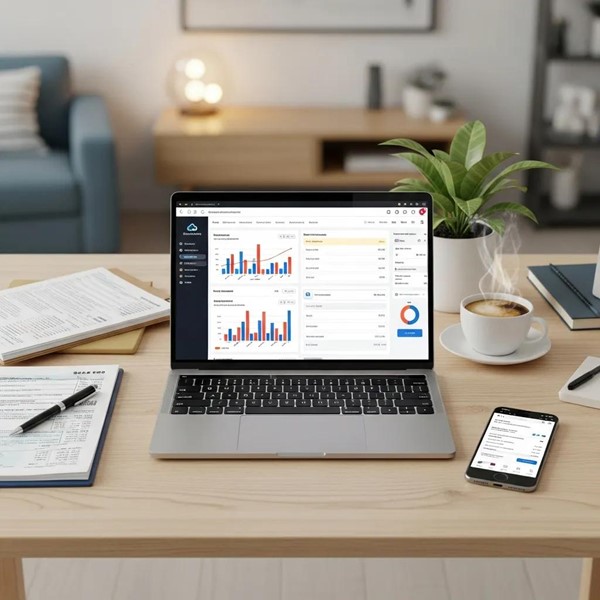
Major cloud accounting platforms such as Xero, QuickBooks and Sage provide automation features, MTD compatibility and integration ecosystems that streamline bookkeeping and tax filing for UK businesses. These solutions offer bank feeds, automatic reconciliation rules, VAT return submission and reporting templates tailored for HMRC requirements, helping businesses maintain digital records and meet Making Tax Digital obligations. Selecting the right platform depends on business size and needs: freelancers value simplicity and low cost, retailers may prioritise inventory and point-of-sale integrations, while limited companies often choose solutions with stronger reporting and multi-user access. Understanding the comparative strengths of each platform helps match software to business processes and tax workflows.
Introductory table comparing major cloud accounting platforms on MTD compatibility, pricing posture and integration strengths to guide selection.
| Software | MTD Compatibility / Pricing | Integration Strengths |
| Xero | Fully MTD-compatible for VAT; transparent pricing tiers for small businesses | Excellent bank feeds, add-on ecosystem for payroll and ecommerce |
| QuickBooks | MTD-ready and strong invoicing features; tiered plans suited to SMEs | Robust cashflow reporting, bank rules and third-party payroll apps |
| Sage | MTD-capable modules and established enterprise features | Strong payroll integration and advanced reporting for larger SMEs |
This comparison highlights trade-offs between automation, reporting and ecosystem depth; the next subsections outline specific Xero and QuickBooks advantages in practical terms.
How Does Xero Bookkeeping Support UK Tax Compliance?
Xero supports UK tax compliance through MTD-enabled VAT filing, continuous bank feeds and a suite of reconciliation and reporting templates that feed advisory workflows and self-assessment preparation. The platform’s automation of bank reconciliation and ability to attach invoices and receipts to transactions creates an auditable digital trail suitable for HMRC queries and year-end accounts. Xero’s reporting templates allow quick extraction of profit-and-loss summaries, VAT control accounts and creditor/debtor analyses that advisors use for forecasting and tax planning. These capabilities make Xero a strong choice for freelancers and small businesses focused on clarity and automated workflows.
What Are the Benefits of QuickBooks Integration for Small Businesses?
QuickBooks provides strengths in invoicing, cashflow reporting and bank rule automation, which helps small businesses maintain accurate ledgers and predict tax liabilities with greater clarity. The platform’s strong app marketplace supports integrations for payroll, ecommerce platforms and receipt capture, enabling end-to-end automation from sales to tax submission. For businesses prioritising rapid invoicing and cashflow monitoring—such as service providers—QuickBooks offers features that speed up collections and reduce late payments that can create VAT or corporation tax cashflow pressure. Choosing between QuickBooks and rivals should be based on whether core needs are invoicing and cashflow versus broader advisory and reporting functionality.
Under the platforms comparison above, businesses should prioritise MTD compatibility and integration with payroll and sales channels to reduce manual work and improve compliance outcomes.
What Specialist Bookkeeping Services Help UK Businesses Stay Financially Efficient?
Specialist bookkeeping services include catch-up bookkeeping, industry-specific bookkeeping for sectors like e-commerce and construction (CIS), and financial reporting and advisory services such as management accounts and cashflow forecasting. These specialist services resolve backlogs, align bookkeeping to sector-specific tax rules and produce forward-looking reports that support strategic decisions. For example, e-commerce bookkeeping reconciles marketplace fees and VAT on cross-border sales, while CIS bookkeeping ensures contractor deductions and submissions are correctly applied. Advisory services transform compliance data into performance metrics—KPIs and forecasts—that guide pricing, hiring and investment choices.
Below is an EAV table comparing typical specialist bookkeeping services by timeframe, cost drivers and ideal client to set expectations before engaging a provider.
| Service | Typical Timeframe / Cost Driver | Ideal Client |
| Catch-up bookkeeping | Weeks to months depending on backlog; cost driven by transaction volume | Businesses that missed periods or switched systems |
| Industry-specific bookkeeping | Ongoing; cost driven by transaction complexity and integrations | E-commerce sellers, contractors under CIS, landlords |
| Financial reporting & advisory | Monthly or quarterly deliverables; cost driven by report depth | Growing SMEs needing forecasts and KPI dashboards |
This comparison clarifies what to expect from specialist packages and helps owners choose services that address both historical issues and forward-looking needs; the final subsection explains catch-up processes in practical terms.
How Does Catch-Up Bookkeeping Resolve Past Financial Gaps?
Catch-up bookkeeping resolves past gaps by collecting historical bank statements, invoices and receipts; performing reconciliations; applying necessary adjustments and producing retrospective management accounts and tax-ready ps. The standard workflow is data collection, matching transactions, correcting categorisation errors, adjusting for missing VAT claims and producing reports that enable accurate tax filings. Timescales vary by backlog size and data quality, but the outcome is a clean ledger that supports accurate VAT returns, self-assessment and business forecasting. Successful catch-up projects also recommend improved routines and system changes to prevent future backlogs, linking directly to advisory outputs that drive growth.
What Financial Reporting and Advisory Services Enhance Business Growth?
Financial reporting and advisory services deliver management accounts, KPI dashboards, cashflow forecasts and tax-efficiency reviews that equip owners to make informed strategic choices about pricing, hiring and investment timing. Regular management accounts convert bookkeeping data into actionable insight—such as gross margin by product, debtor ageing and cash runway—that directly influence business decisions. Advisory outputs commonly include scenario-based forecasts and tax-efficiency recommendations, which help prioritise actions that improve profitability and reduce tax exposure. Integrating advisory with ongoing bookkeeping ensures that compliance data continuously feeds strategic planning rather than remaining a retrospective task.
If you are ready to discuss how bookkeeping, payroll or specialist catch-up work can reduce risk and free your time, contact OMW Locksmith for a prompt conversation about practical next steps.